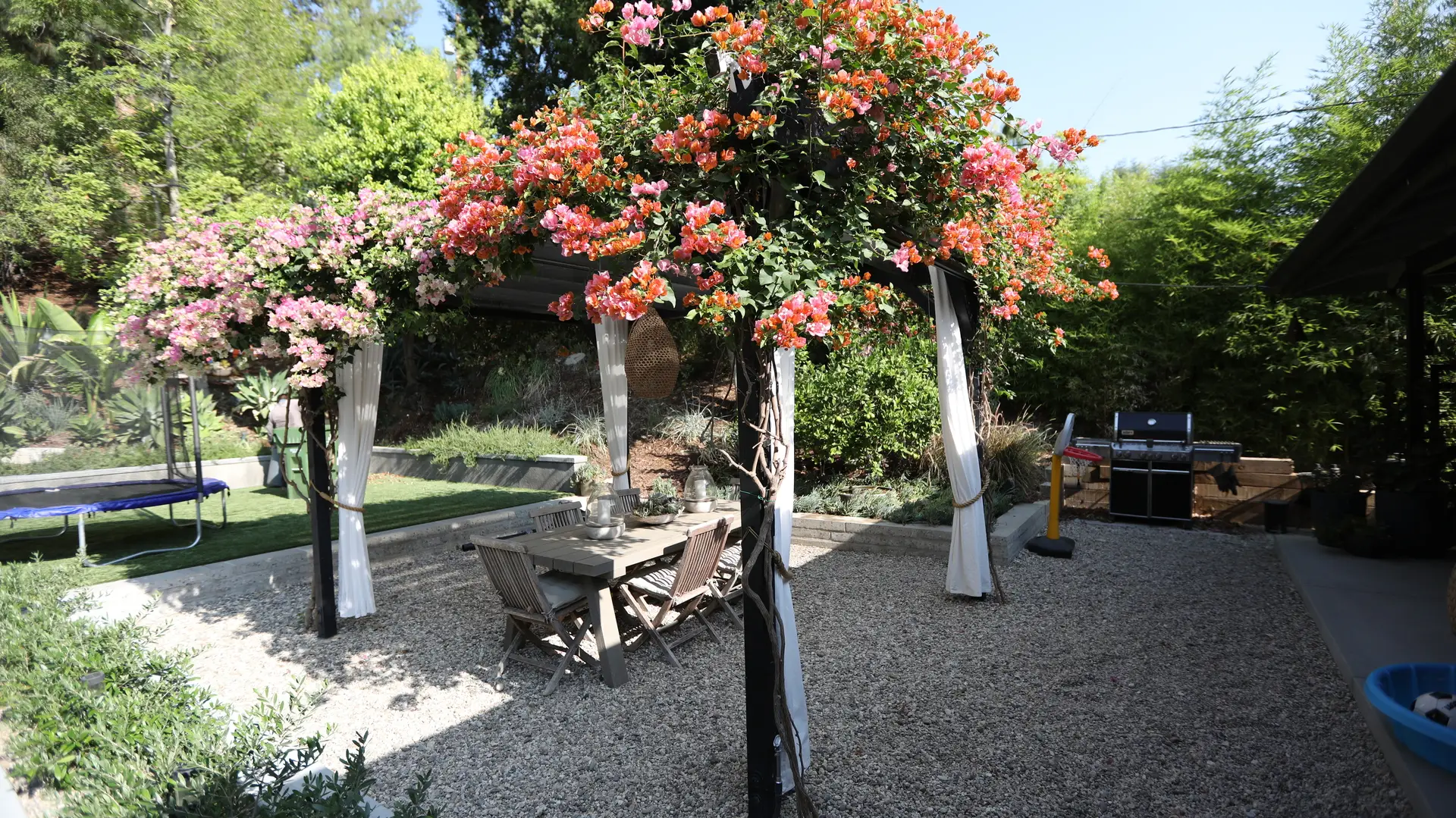
In Southern California, the landscape conversation has fundamentally shifted. The mid-century ideal of a rolling, bright green lawn—borrowed largely from the rain-heavy estates of the East Coast—has been replaced by a more mature, authentic design philosophy.
Today, the most coveted estates in Los Angeles, from Malibu to the Hollywood Hills, are leaning into climate-native, drought-tolerant landscapes.
However, in the luxury market, “drought-tolerant” is often misunderstood. It is frequently associated with cost-cutting measures, minimalist desert gravel, or compromise. The reality is exactly the opposite: a highly curated, water-wise resort yard is a significant, high-return architectural asset.
Understanding where the capital is actually allocated in a premium, sustainable landscape is the first step to executing a project that appreciates in value for decades.
1. Specimen Architecture Over Bulk Planting
The primary differentiator between a standard yard renovation and a high-end estate design is the scale and maturity of the botanical selections.
A budget-conscious drought-tolerant project typically relies on mass-purchasing small, immature ground covers and waiting years for them to fill in. A luxury build treats plants as living sculptures.
- The Focal Point: Instead of planting ten small shrubs, a high-end design allocates budget toward singular, mature specimen trees—such as a century-old, multi-trunk Olive tree (Olea europaea) or a structural, ancient Coast Live Oak.
- The Impact: These heritage specimens provide immediate vertical scale, dramatic shadow patterns against architectural walls, and an instant sense of permanence that simply cannot be manufactured overnight.
- The Ground Layer: Rather than simple wood mulch, the understory is composed of architectural succulents like Blue Glow Agave or the striking geometry of Agave attenuata, meticulously spaced to emphasize their form against clean hardscape lines.
2. The Shift from Lawn to Premium Hardscape
When you eliminate a water-intensive turf lawn, you aren’t just removing grass; you are gaining a massive canvas of usable square footage. In a luxury build, the budget naturally shifts from botanical maintenance to architectural hardscape infrastructure.
[Traditional Yard]  --> High Water Use  --> Constant Maintenance --> Limited Function
[Premium Native]    --> Zero Water Use --> Permanent Structure  --> Expanded Living Space
Replacing a lawn with a masterfully engineered hardscape creates distinct outdoor “rooms” that seamlessly extend the home’s interior footprint. This involves investing in premium, durable materials:
- Oversized Poured-in-Place Concrete: Clean, geometric pads separated by precise bands of dark Mexican beach pebbles or grey river stones.
- White Terrazzo Pavers: Providing a smooth, cool-toned surface that reflects the California sun without absorbing excess heat.
- Hand-Selected Natural Stone: Utilizing premium flagstone or limestone to ground modern pavilions, outdoor kitchens, and custom fire pit lounges.
The initial investment in these permanent surfaces is higher than laying down sod, but it completely eliminates the ongoing costs of reseeding, chemical fertilizing, and heavy mowing, while drastically increasing property value.
3. Intelligent Subsurface Infrastructure
A truly sophisticated sustainable landscape relies on what is happening beneath the surface. True climate resilience is powered by invisible technology and advanced engineering.
Advanced Water Management
High-end native yards don’t just survive on less water; they manage it intelligently. Budget is directed toward high-efficiency subsurface drip irrigation networks that deliver water directly to the root zones, eliminating evaporation loss entirely. These systems are paired with smart, satellite-linked weather controllers that automatically adjust watering schedules based on real-time Los Angeles microclimate data.
Soil Reconstruction
Native and drought-tolerant plants require exceptional drainage to thrive, especially during California’s intense seasonal downpours. A premium build involves extensive soil engineering—excavating heavy clay, introducing specialized organic aggregates, and creating subterranean drainage profiles. This ensures that your botanical investments never suffer from root rot or soil compaction.
The Ultimate Return on Value
Ultimately, the cost of a luxury, drought-tolerant landscape is defined by a commitment to permanence, structure, and architectural harmony.
By investing in mature specimen trees, premium stone and concrete hardscapes, and intelligent subsurface systems, you aren’t merely trying to reduce a utility bill. You are creating an authentic, climate-resilient sanctuary that honors the true character of the Southern California landscape—one that remains flawless, effortless, and deeply sophisticated through every season.