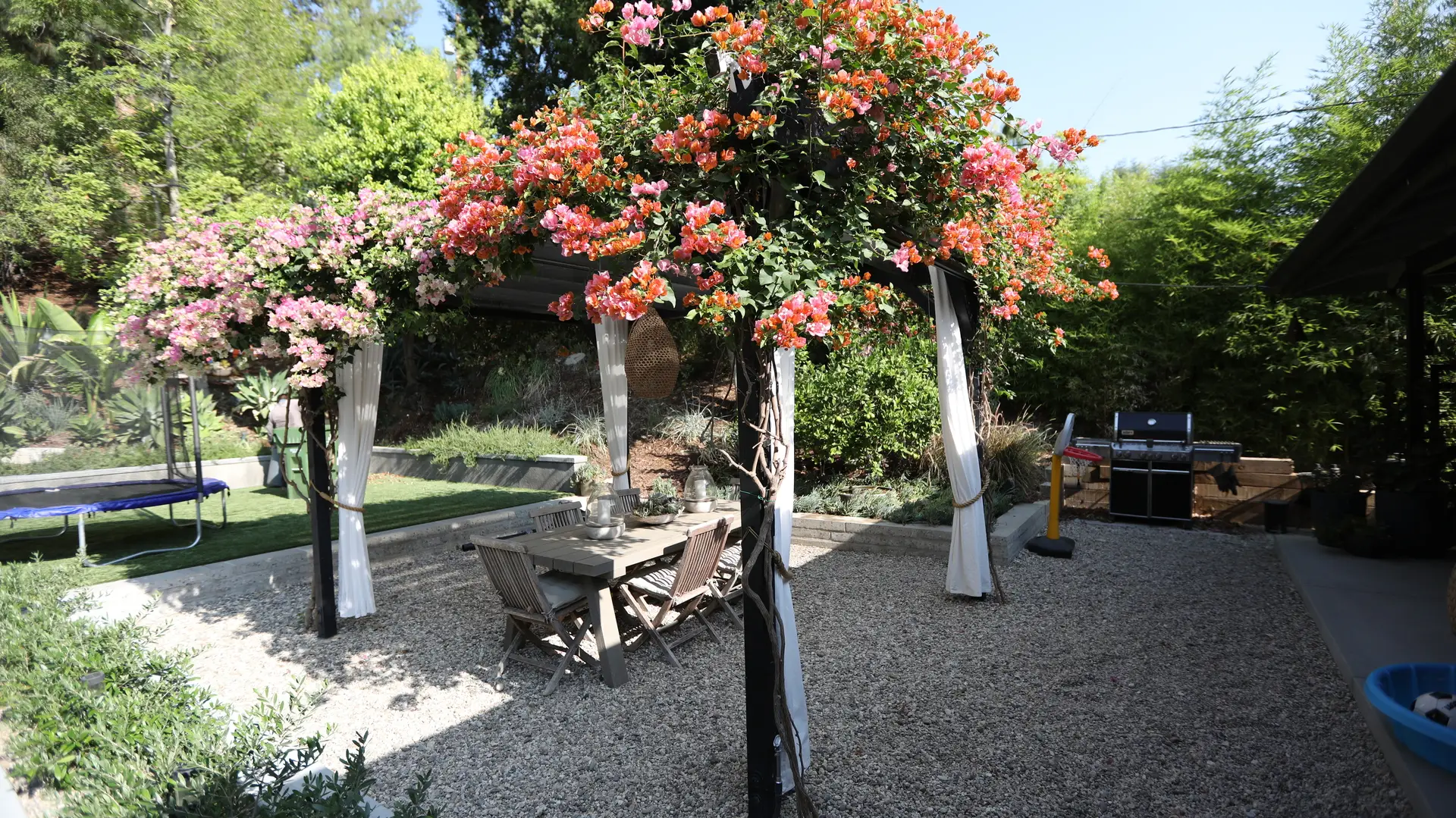
In Southern California, our outdoor living spaces are more than just an addition to the home; they are the heart of the lifestyle. However, as weather patterns become more unpredictable (shifting from intense heatwaves in Brentwood to heavy atmospheric rivers hitting the South Bay) the way we design these spaces must evolve.
“Climate-proofing” is the process of integrating high-performance engineering with luxury aesthetics. It ensures that your investment does not just look spectacular on day one, but remains structurally sound and environmentally responsible for decades. Here are five essential strategies for creating a resilient, modern sanctuary.
1. High-Performance Permeable Pavers

Standard concrete slabs and non-porous surfaces contribute to urban runoff and the “heat island” effect, where hardscapes trap and radiate warmth. By utilizing ICPI-certified permeable paver systems, you create what is essentially an invisible drain for your property.
These systems use specialized aggregate layers that allow rainwater to filter naturally back into the local water table instead of flooding the street or pooling on your patio. Beyond the environmental benefits, these pavers stay significantly cooler and more stable during extreme temperature swings, protecting the longevity of your outdoor flooring.
2. Strategic “Hydro-Zoning” Design

Lush, vibrant landscapes often fail because “thirsty” plants are placed in the same beds as drought-tolerant species, leading to a cycle of overwatering and root rot. Climate-resilient design utilizes hydro-zones, a method of grouping plants with identical water requirements together.
By segmenting your garden this way, your irrigation system can deliver the precise amount of moisture needed for each specific area. This ensures that your tropical accents stay lush and your succulents stay healthy, all while eliminating water waste and maintaining a balanced ecosystem in your backyard.
3. Smart-Zone Irrigation and Soil Mapping

Luxury conservation in the modern era relies on data rather than guesswork. Modern irrigation systems now utilize smart-scheduling technology that takes your specific micro-climate and soil type into account.
Whether your property sits on the sandy soil of Manhattan Beach or the denser clay found further inland, these systems use real-time local weather data to adjust on the fly. They automatically skip cycles during periods of high humidity or rain, ensuring your garden remains healthy while staying strictly compliant with California’s evolving water standards.
4. Thermal-Resistant Hardscape Selections

In sun-drenched areas like the Palisades or Malibu, a dark stone patio can quickly become a heat trap, radiating warmth long after the sun has set. A key element of climate-proofing is the selection of materials with a high Solar Reflectance Index (SRI).
Lighter, premium concrete pavers and natural stones reflect more sunlight, keeping the surface much cooler underfoot. This is not just a matter of comfort for bare feet; it also reduces the ambient heat that can radiate through your home’s glass doors and windows, helping to keep your interior cooler as well.
5. NCMA-Certified “Living” Retaining Walls

For properties with any degree of slope, climate-proofing is essential for erosion control. Managing hydro-static pressure (the immense weight of water-logged soil behind a wall) is the difference between a design that lasts and one that fails during a storm cycle.
Utilizing NCMA-certified wall engineering ensures that your multi-tiered designs are built to handle the elements. By integrating hidden drainage channels or living elements where plants are grown directly into the wall structure, you can create a beautiful, tiered landscape that remains structurally sound regardless of the weather.
The Future of Outdoor Living
A truly luxury backyard is one that offers peace of mind. By focusing on resilience and smart engineering, you can enjoy a space that is as durable as it is beautiful. Climate-proofing is an investment in the future of your home, ensuring that your personal oasis remains a sanctuary for years to come.