Living in the South Bay or West LA offers an incredible lifestyle, but it often comes with the challenge of maximizing value on tightly packed lots. Building an Accessory Dwelling Unit (ADU) is one of the most effective ways to boost your property’s equity and functionality, but the unit’s success often depends on what happens outside its walls.
Thoughtful landscaping is the final element that transitions a new structure from a “shed in the back” to a sophisticated backyard compound. In neighborhoods like Manhattan Beach, Santa Monica, or the Pacific Palisades, the goal is not just density; it is curating an estate that feels seamless and integrated. Here are five essential elements for creating that visual harmony.
1. Define Purposeful Zones: Structured Living

Every square foot of a small backyard must have a dedicated function. Instead of leaving the space as an open, unused lawn, structure the yard with pathways and varied paving textures. In Southern California, this might mean large concrete pavers in a main dining area leading to a central, irregular stone pathway through a diverse garden bed. Incorporating a distinct low stucco retaining wall with integrated seating and a modern fire table creates a secluded lounging zone. This clear spatial organization ensures the entire property feels structured and easy to navigate, which is essential when sharing the yard between two households.
2. Prioritize Seclusion: Natural and Layered Screens

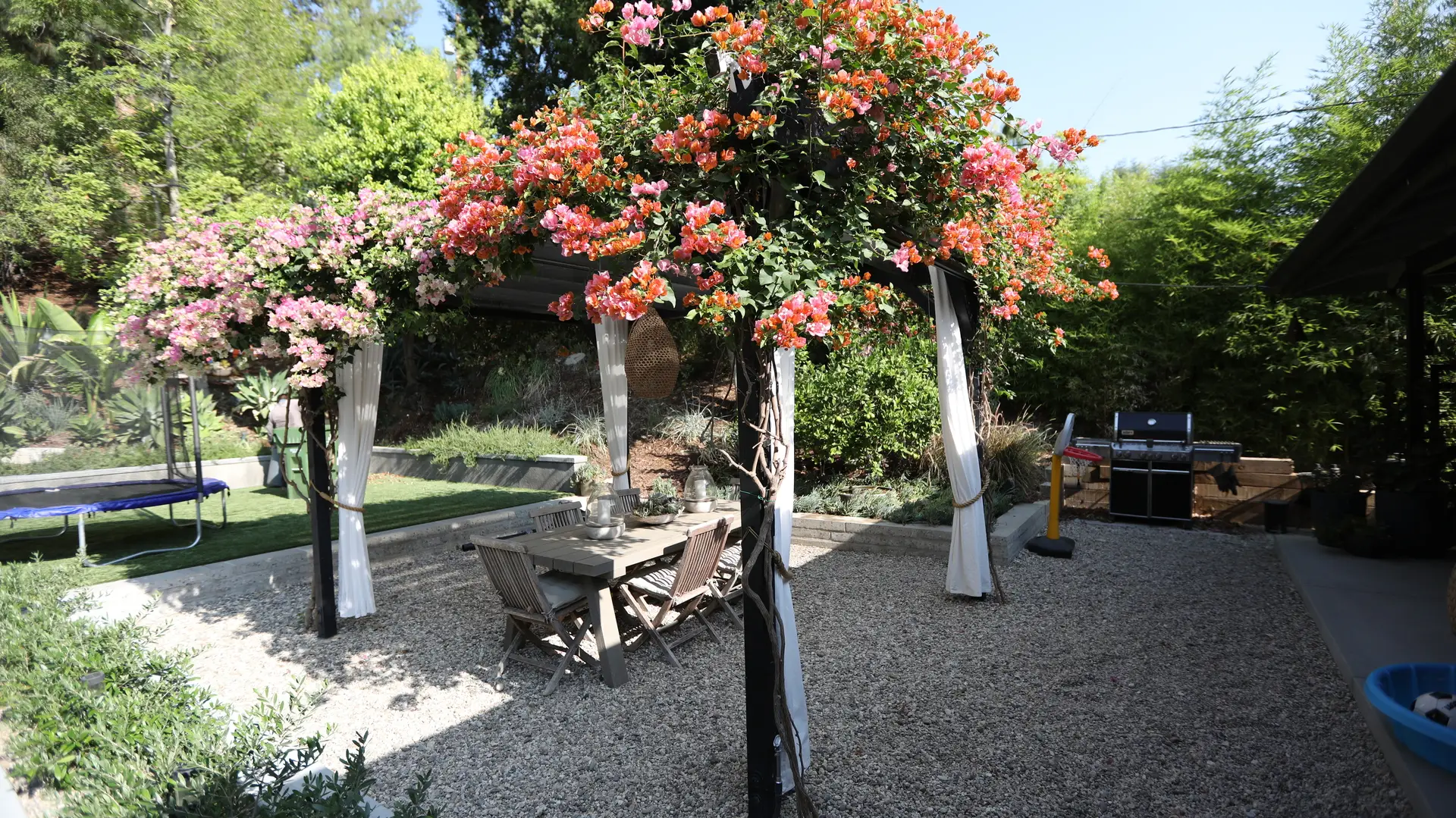
Privacy is consistently the number one concern for homeowners adding an ADU. However, a high, imposing “Berlin Wall” fence can make a small yard feel claustrophobic and uninviting. Instead, rely on layered greenery. Utilize a combination of tall, dense Ficus Nitida hedges and substantial bamboo thickets. These can be complemented by a custom dark wood trellis archway over the path, heavily covered with blooming purple bougainvillea or star jasmine. Natural screens provide visual separation while still allowing sunlight and coastal breezes to flow through the compound.
3. Bridge the Architecture with Pathways: Textured Transitions

A well-designed walkway does more than facilitate movement; it creates a visual anchor that unifies the main house with the ADU. The materials selected should echo the contemporary lines of the ADU itself. Large, square concrete pavers with an integrated aggregate texture feel appropriate in both South Bay coastal and West LA modern settings. Embedding LED strip lighting directly into the paver joints and using minimalist solar pathway lights provides both a safer journey at dusk and significant aesthetic charm.
4. Expand Living Space: Vertical Innovations

In Southern California, our temperate climate means the “usable living space” extends far beyond the interior walls. When horizontal square footage is at an absolute premium, you must look upward. You can maximize a narrow side patio or courtyard by turning it into a thriving vertical garden. A substantial wooden trellis system covering the ADU exterior wall or boundary fence—adorned with modular green wall panels, cascading foliage, and ferns—adds lushness and softens architectural lines without sacrificing valuable foot traffic area on the pathway below.
5. Integrate Indoor and Outdoor Design: Blurring the Lines

The hallmark of luxury coastal design is visual continuity. The best ADUs utilize expansive glazing—large sliding glass doors and floor-to-ceiling windows—not just for natural light, but to make the surrounding garden feel like part of the home. By matching outdoor color palettes and materials, such as textured concrete and natural stone, to the ADU’s interior design, you create a sense of continuity. This intentional flow makes a smaller footprint feel significantly larger, more open, and more luxurious.
Crafting Your Backyard Sanctuary
The decision to add an ADU is about more than just adding square footage; it is about reimagining how your entire property functions as a cohesive living environment. By moving away from the “accessory” mindset and toward the “compound” philosophy, you ensure that every guest, family member, or tenant feels a sense of belonging and privacy.
When you prioritize purposeful zoning, natural screening, and a unified material palette, you do more than just follow building codes—you elevate the architectural integrity of your home. In the competitive West LA and South Bay markets, these landscaping details are often the difference between a standard rental unit and a premium, high-value estate.