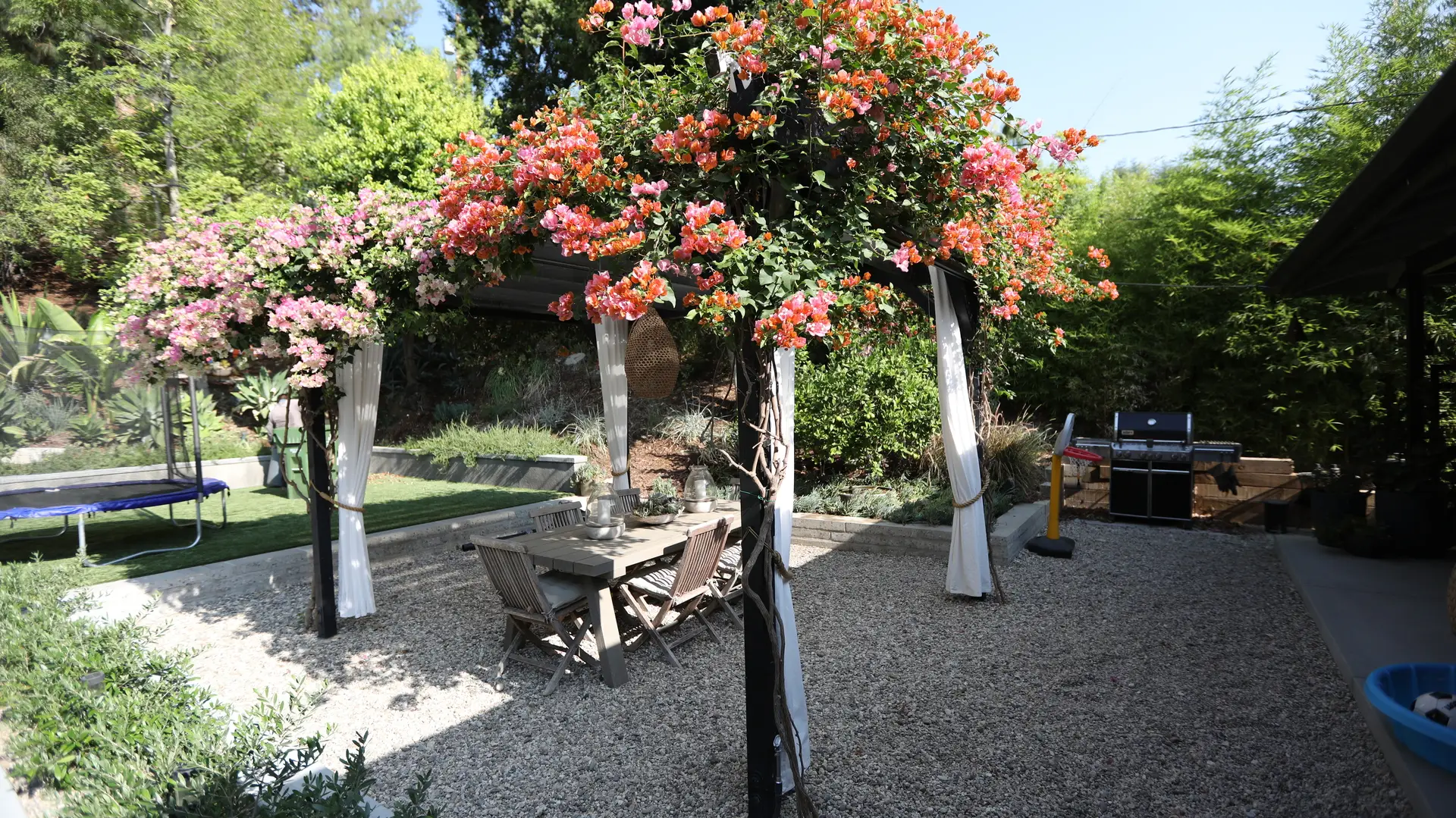
In Southern California, we are accustomed to a certain pace of life. We want our coffee fast, our commutes short, and our Amazon packages on the doorstep before we’ve even finished the checkout process. This culture of “now” works for almost everything except the living, breathing environment outside our back doors.
When you invest in a new landscape for your home, whether it’s a coastal retreat in Playa del Rey or a family estate in Brentwood Park, there is often a period of “landscape puberty.” You look at the small, 18-inch shrubs and the spindly saplings, then look at your neighbor’s lush, 30-foot canopy, and feel the itch of impatience. You want the privacy, the shade, and the aesthetic “fullness” today.
While Mother Nature follows her own calendar, there are ways to encourage her to move a little faster. Through decades of planting across the South Bay and West LA, we’ve identified five “growth hacks” that help a landscape transition from “just installed” to “perfectly mature” in record time.
1. The Geometry of Growth: Proper Spacing

One of the most common mistakes homeowners make is trying to solve the “empty space” problem by over-planting. It is a natural impulse; you see a gap in the dirt and you want to fill it with another shrub. However, we call this the “Stop Hitting Your Sister” rule.
Just like siblings in the back seat of a car on a long drive to San Diego, plants need their personal space. If you crowd five shrubs into a space meant for three, they will spend their energy competing for root space, sunlight, and water rather than growing upward. This leads to stunted growth, fungal issues from lack of airflow, and a tangled mess that is impossible to maintain.
By following a professional 3D landscape design, you can visualize what those plants will look like in five to seven years. It allows you to trust the process, knowing that the “empty” space today is actually the breathing room your plants need to become the lush hedge of tomorrow.
2. Mastering the Westside Micro-Climate: Hydration

In our corner of the world, we deal with a unique set of atmospheric challenges. The scorching inland heat often battles with the salt-heavy marine layer, and for a young plant, this is exhausting.
When a plant is moved from a nursery container into your soil in Santa Monica or El Segundo, its root system is fragile. It doesn’t have the reach to find deep pockets of groundwater yet. Growth hack number two is simple but vital: consistent, deep hydration.
This doesn’t mean keeping the soil a swamp, but it does mean ensuring the root ball never completely dries out during that critical first year. If a plant is stressed by thirst, it stops growing to go into “survival mode.” By keeping it perfectly hydrated, you allow the plant to focus all its caloric energy on expansion.
3. Soil Health is Your Secret Weapon

Many people view soil as just “dirt,” but in neighborhoods like the Palisades or Mar Vista, the soil composition can vary wildly from sandy to heavy clay. To get a mature look faster, you cannot rely on native soil alone.
Think of soil amendments and high-quality fertilizers as the “nutrition plan” for your yard. When we install a project, we often improve the soil at the time of planting, but the work doesn’t stop there. Regular, scheduled feeding ensures the plant has a steady supply of nitrogen, phosphorus, and potassium. When a plant is well-fed, it doesn’t just grow taller; it grows stronger, with thicker stems and more vibrant foliage that fills in those gaps much faster than a neglected plant would.
4. The Paradox of the Pruning Shears

It seems entirely counterintuitive to cut a plant that you want to grow larger. However, strategic pruning is one of the most effective ways to “hack” the growth cycle.
When you lightly shear a shrub or hand-prune a young tree, you are actually redirecting the plant’s hormones. By removing the “terminal buds” (the tips), you encourage the plant to send out lateral growth. This is how you turn a thin, leggy plant into a thick, privacy-granting screen.
For trees, early pruning is even more critical. Removing crossing branches or “suckers” while the tree is young ensures that the tree’s energy is funneled into its main structural branches. A tree that is pruned correctly in its youth will reach its majestic, mature height much faster than one left to grow wild and tangled.
5. Strategic “Anchor” Investments

If your budget allows for a little flexibility, the ultimate growth hack is to “buy time.” While most of your landscape might consist of 5-gallon shrubs and 15-gallon specimens, you should consider investing in a few “Anchor” trees.
Trees take significantly longer to reach maturity than shrubs or groundcovers. By choosing to install two or three substantial trees, perhaps 24-inch or 36-inch boxes, you immediately change the scale of your property. When you have a 10-foot evergreen or a 4-inch diameter deciduous tree already standing tall, the smaller plantings around it seem more intentional. It creates an optical illusion of maturity that makes the entire yard feel “finished,” even while the smaller plants are still catching up.
Planning for the 2026 Season
Achieving a lush, established look in Southern California is about balancing the science of horticulture with the art of design. Whether you are looking for more privacy in Manhattan Beach or want to create a shaded oasis in a West LA backyard, the way you treat your plants in their first few seasons will dictate how they look for the next twenty years.
At our Design Scapes Inc., we’ve spent years navigating the specific soil and climate needs of the South Bay and Westside. We focus on planting the right species in the right spots, ensuring they have the room and resources to thrive.
If you are thinking about a new landscape project for 2026 and want to make sure your investment is built to last, we are always happy to chat. Whether you have questions about which trees thrive best in our coastal air or how to set up an irrigation schedule that actually works, feel free to reach out. We are here to help you navigate the process and turn that “tiny tree” into the centerpiece of your home.