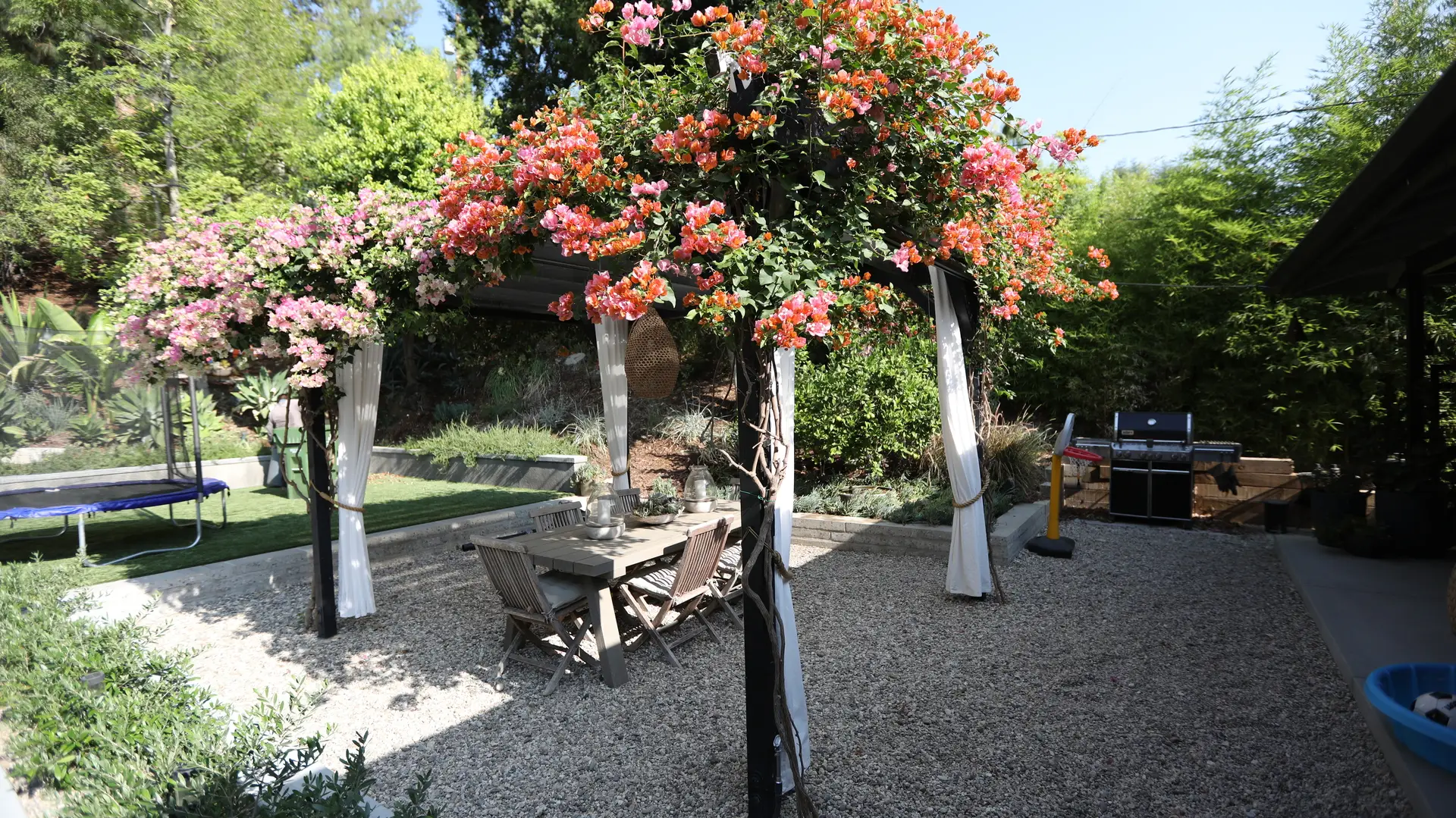
Key 1: Create a Destination
The most critical step in small-space design is establishing a destination. Without a clear purpose or focal point, there is no reason for you or your guests to venture outside. Think about drawing the eye from within the home: design from a door or a window, creating a scene that captures your attention and pulls you into the yard. This destination might be a cozy fire pit, an inviting seating area, or a tranquil water feature. Once the destination is established, every other element in the design supports its purpose.

Key 2: Build Essential Cover
A successful outdoor space needs protection from the elements. This cover doesn’t require a massive structure; it simply requires smart design. We highly recommend sneaking in some form of cover, even in the tightest backyards. You can get creative with structures that incorporate seating or lighting. If space is truly limited, consider a pergola. Pergolas are wonderfully flexible, often avoid lengthy permit processes, and can be designed to provide sun protection, shade, and even waterproof cover over your primary destination.

Key 3: Design for Privacy
Privacy is often the number one reason homeowners seek a redesign. In a small space, you need smart solutions to screen out neighbors without building a prison wall. Think vertically: solutions like trellises with arbors, standalone privacy screens, or strategic planting of dense, vertical hedges like bamboo are excellent. For a unique touch, consider installing a privacy screen on the back of a pergola and adding louvered lighting behind it to create an art feature that is beautiful at night. You can even use raised concrete planters to grow dense greenery that provides screening without requiring extensive ground space.

Key 4: Integrate a Water Feature
A water feature is often the highlight of a small outdoor space. Not only are they visually stunning, but they offer a therapeutic benefit: the sound of moving water provides a gentle white noise distraction that drowns out traffic or neighborhood sounds. Water features are incredibly versatile. They can be integrated into a seat wall, designed as a small trough or pondless rock waterfall, or even made from decorative flower pots. The sound of moving water instantly enhances the peaceful environment of your sanctuary.

Key 5: Warm Up the Space with Fire
Fire features naturally draw people in and often serve as the main destination point. You want to locate a fire feature (either a fireplace or a fire pit) in good proximity to your home’s windows so the dancing flame captures your eye. Even in small spaces, you can incorporate both a fireplace and a fire pit. A fireplace is especially useful as it can double as a screening wall, providing warmth and privacy simultaneously. Fire features are the ultimate way to create an atmosphere that makes you want to stay outside longer.

Key 6: Sneak in a Bar
Even if your backyard is tiny, you can almost always sneak in a bar. This could be a railing that doubles as a bar top on a deck, or a small cocktail table built around an existing post of a covered structure. Look for creative space-saving features, such as pivot-out bar stools connected to the structure that avoid the need for cumbersome freestanding chairs. A well-placed bar adds significant punch and functionality to your entertaining space.

Key 7: Plant Vertical Gardens
Every outdoor space benefits from vibrant color and fragrance. If you cannot afford large garden beds, think vertically! Small garden spaces are achievable even in the smallest areas. These can include herb beds on a fence, flower pots, or built-in raised garden beds. The trick is simply getting creative with vertical structures to grow flowers, herbs, or vegetables that bring life and vibrance to your patio without consuming valuable floor space.

Key 8: Utilize Built-In Seating
Built-in seating is essential for maximizing the use of space in a small courtyard or backyard. Built-in benches can be tucked into corners and along retaining walls that were previously unusable. This ensures the design is clean and efficient. Furthermore, built-in seating is often a dual-use structure, as the seat portion can lift up to provide essential storage for pillows, tools, and materials, helping you keep your small oasis tidy.

Key 9: Feature Focal Landscaping
If you have an unattractive wall or fence line, transform it into a living art piece. Focal feature landscaping includes living walls or using climbing vines like jasmine to cover a bland surface. By framing the area or providing a simple trellis, you draw the eye away from the undesirable background (like a neighbor’s garage) and create a beautiful, enjoyable focal point using greenery.

Key 10: Leverage Sunken Areas
One of the most unique secrets for creating dimension is leveraging slope by designing a sunken area. By going down into the earth and retaining the surrounding area, you visually separate the space, creating a hidden oasis. This technique works perfectly for fire pits and intimate seating areas, giving the feeling of an exclusive, hidden room while maximizing privacy and functional space.

The Transformation Awaits
We hope these 10 secrets resonate with you and inspire you to see the immense potential in your small backyard. The difference between a crowded space and a beautiful sanctuary is simply a smart design plan.
If you are ready to stop guessing and secure a master plan for a space that is efficient, beautiful, and built to last, contact us today for a professional design consultation.
Looking for More Inspiration?
Check out our portfolio for examples of small-space custom designs we have built out!